Coffee Table Trays, Books, Candles, and Vases: How to Make Them Work Together
You bought the tray. You have the books. The candle is on the shelf, and the vase sits somewhere in another room because you are not quite sure where it belongs. Separately, each piece makes sense. But when you try to put them all together on your coffee table, something feels off, either too crowded, too random, or just not as polished as the rooms you see in magazines.
This post contains affiliate links. If you purchase through these links, I may earn a small commission at no extra cost to you. Thank you for supporting Harvest Edge Living.
The good news is that there is a reason those styled tables look the way they do, and it has nothing to do with expensive taste or a design degree. It comes down to understanding how these four items talk to each other: how their heights relate, how their materials complement or contrast, and how their colors either pull the eye forward or create calm. Once you understand those rules, putting it all together becomes easy.
Why These Four Items Work as a Set
Trays, books, candles, and vases each play a specific role in a styled coffee table, and that is exactly why they appear together so often. They are not interchangeable, each one contributes something the others cannot.
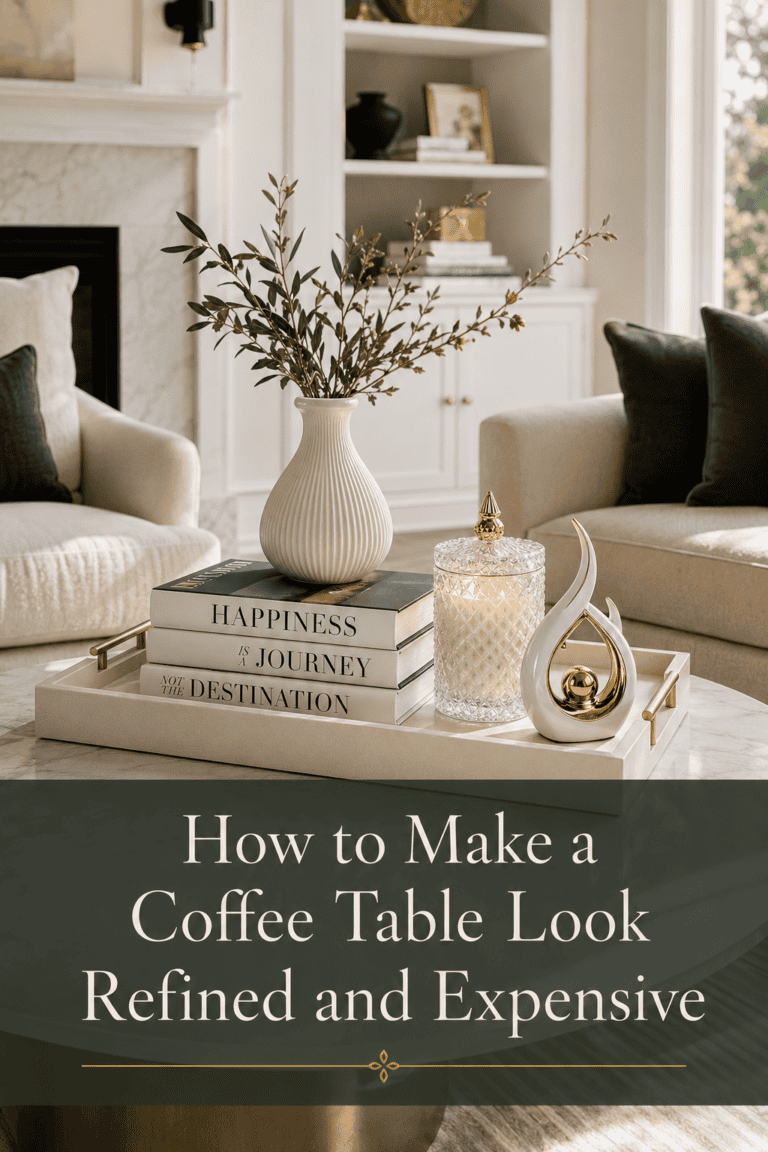
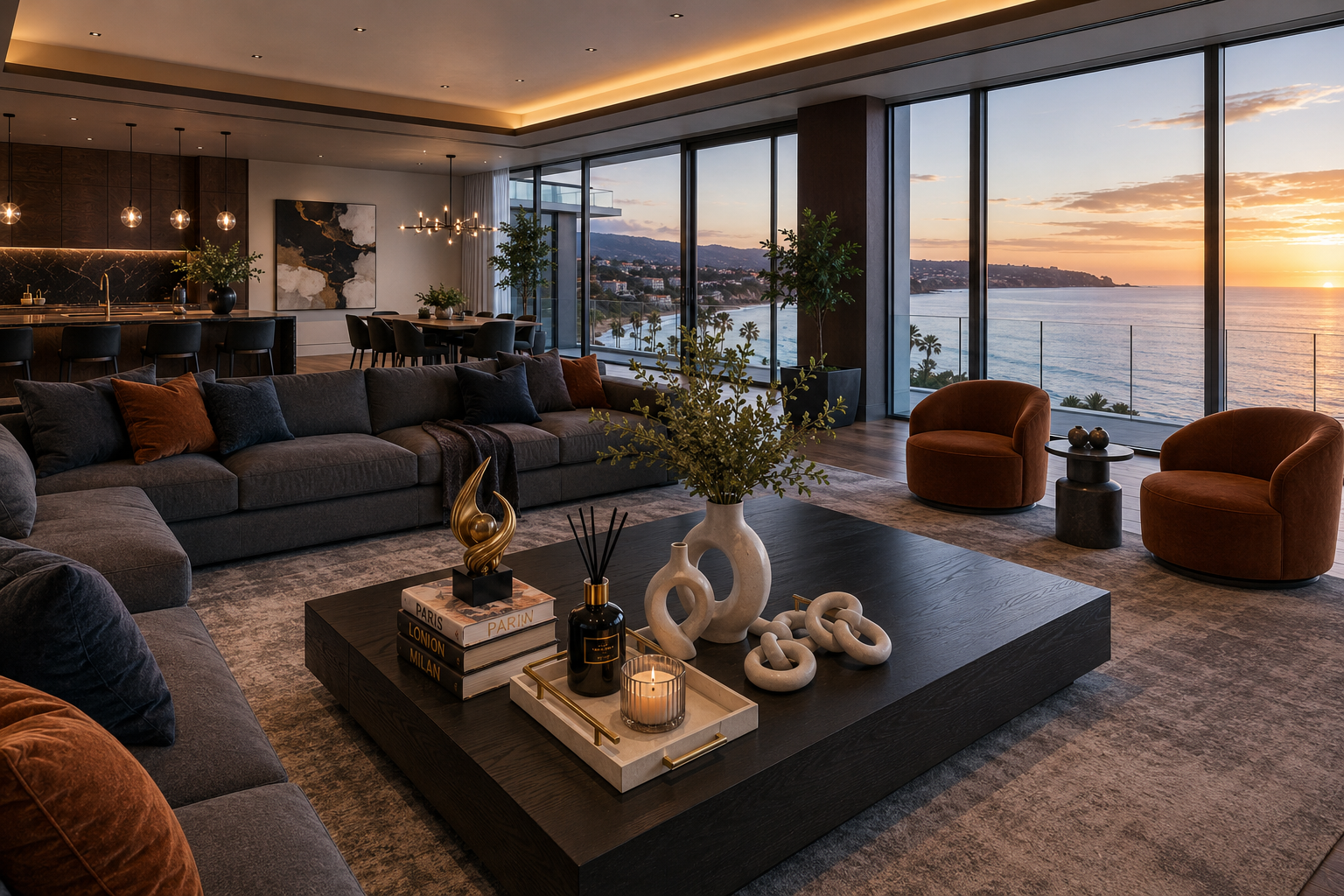
The tray creates structure. It turns a flat surface into a contained visual zone, giving the other items a place to belong rather than simply sitting on the table at random. Without it, even beautiful objects can look scattered.
Books add height variation and texture. A stack of two or three books lifts something off the flat surface, creating a gentle elevation that your eye follows naturally. They also bring color and pattern into the arrangement without requiring a single flower or decorative object.
A candle adds warmth, literally and visually. Whether it is lit or not, a candle signals comfort. It softens what could otherwise feel too structured or showroom-like. The subtle vertical shape also provides a visual anchor that draws the eye upward.
The vase (even an empty one) introduces organic softness. Its shape is never perfectly rigid, and whether it holds a single stem or nothing at all, it breaks the geometry of straight-edged objects and brings a living quality to the group.
The Harmony Rule: Materials First, Colors Second
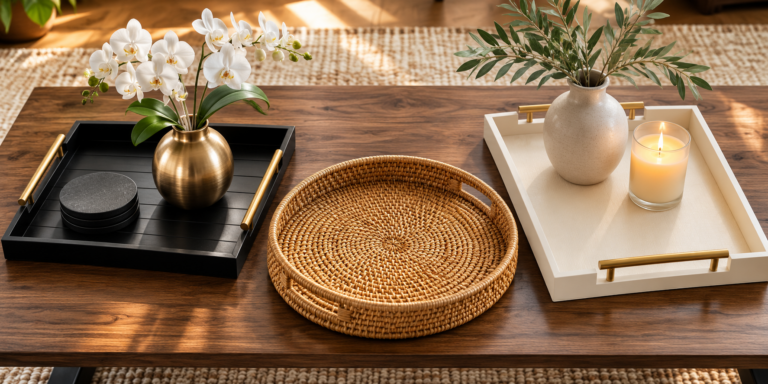
Before you think about color, decide on your material story. Materials are the invisible thread that makes a grouping feel cohesive even before anyone consciously notices them. The most common mistake is mixing materials randomly (a glossy lacquered tray with a rough linen book cover, a chrome candleholder, and a ceramic vase) and wondering why it feels unsettled.
A well-styled grouping picks two or three materials and repeats them. Some pairings that work reliably:
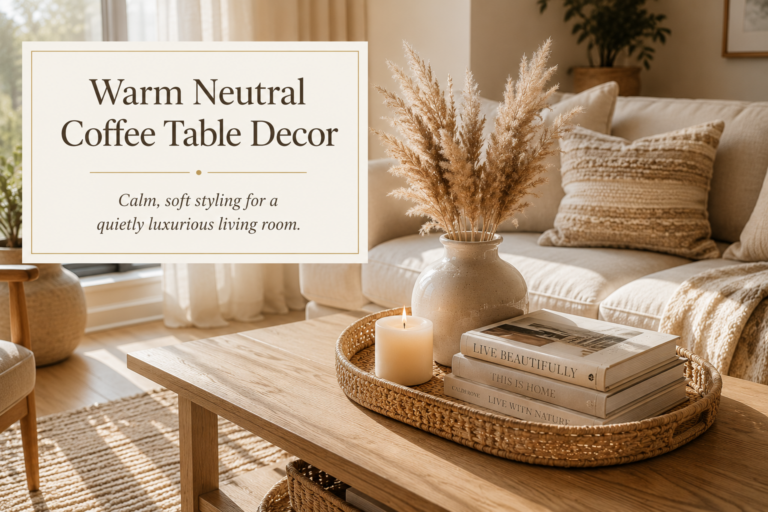
- Wood + ceramic + linen, earthy, warm, organic. A wooden tray, a ceramic candle, a linen-covered book, a matte ceramic vase.
- Marble + brass + glass, cool, elegant, quietly luxurious. A marble-effect tray, a brass candleholder, a glass vase, books with gold-spined covers.
- Woven rattan + terracotta + cotton, relaxed, natural, bohemian. A woven tray, a terracotta candle vessel, a cotton-covered book, a small terracotta or dried-grass vase.
- Black + matte concrete + white, minimal, graphic, modern. A black lacquer tray, a concrete candle, a white vase, books with clean dark covers.
Once your material story is set, color becomes much easier because you are working within a palette that is already grounded.
Color Coordination Between the Four Pieces
The safest color rule for coffee table styling is the 60-30-10 approach scaled down to your arrangement. Sixty percent of the visual weight should be one neutral (usually the tray and books. Thirty percent is a secondary tone) the vase or candle color. Ten percent is an accent that appears in just one small place, like the spine of a book or the color of the candle flame itself.
In practice, this looks like:
- A cream tray, cream and taupe books (60%) + a sage green vase (30%) + one dusty rose candle (10%)
- A black tray, dark charcoal and white books (60%) + a clear glass vase with one stem (30%) + a single brass candle (10%)
- A natural wood tray, tan and ivory books (60%) + a terracotta vase (30%) + a deep forest green candle (10%)
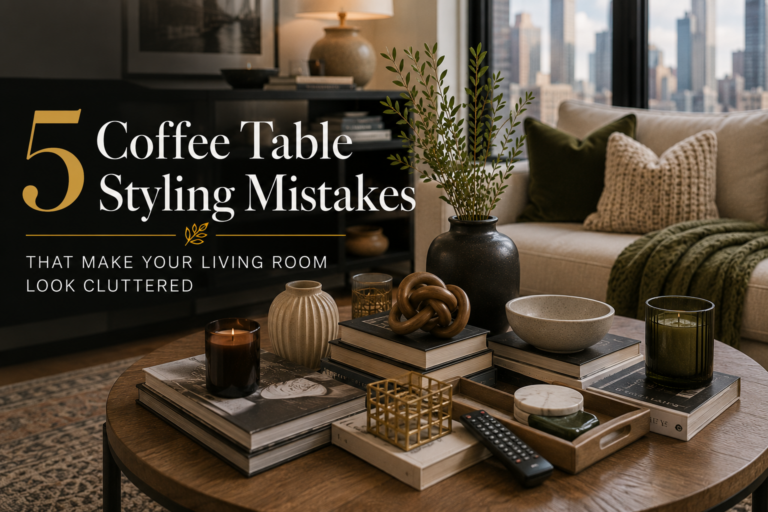
What you want to avoid is too many competing colors. If every piece is a different hue, the eye does not know where to settle. The arrangement will look busy even if every individual object is beautiful on its own.
Getting the Proportions Right
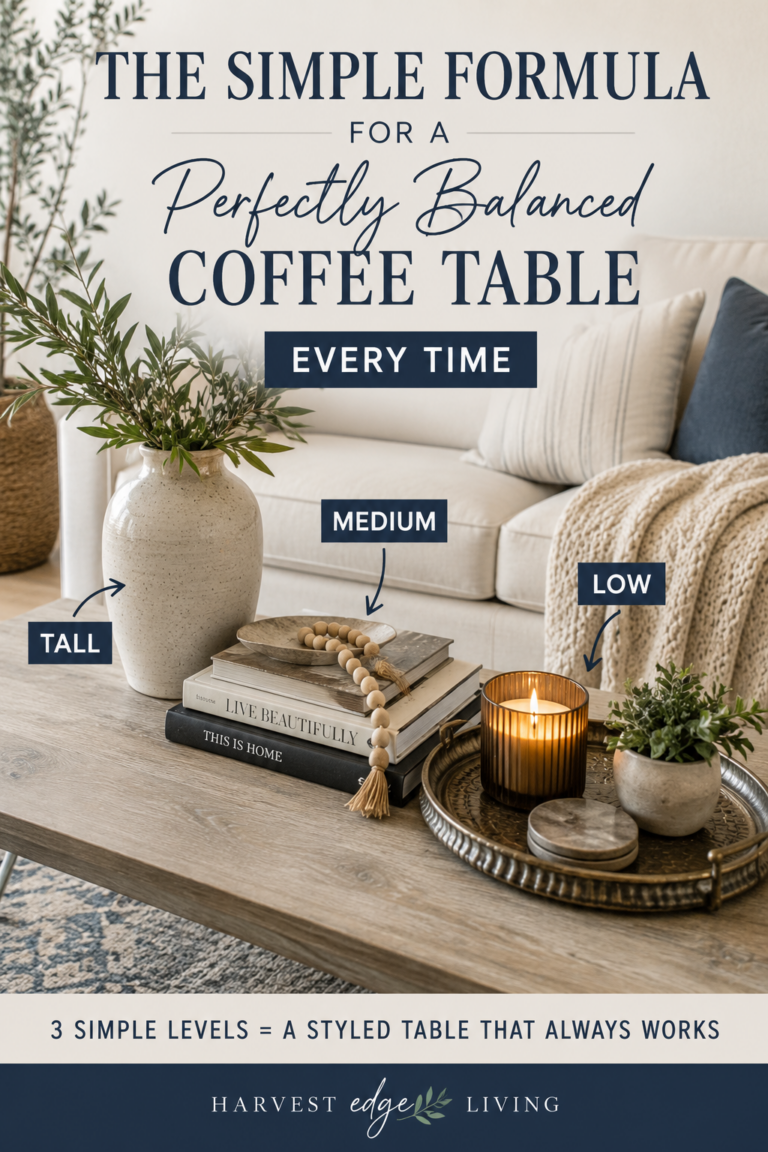
Height is one of the most important factors in whether a coffee table grouping reads as intentional or accidental. A flat arrangement (everything at roughly the same height) looks unfinished even when the pieces are lovely. What you want is a gentle visual staircase, with items stepping up and then back down.
A formula that works on almost any size coffee table:
- Place your stack of two or three books flat inside the tray, this becomes your base elevation and your visual anchor.
- Set the candle on top of the books or directly beside them inside the tray. This lifts the candle to mid-height.
- Place the vase outside or at the edge of the tray, slightly taller than the candle. The vase becomes the tallest point and the visual peak of the arrangement.
- Keep one or two inches of tray edge visible around the objects so the tray itself reads as a frame, not just a crowded platform.
This creates a peak-and-valley silhouette when viewed from the side: tray edge low, books medium, candle medium-high, vase tall. That rhythm is what your eye reads as “styled” even when you cannot identify exactly why.
The Rule of Odd Numbers
If you are working with books, odd stacks always look better than even. Two books can look intentional, but three books almost always looks more artful. If you are adding a small decorative object on top of the books (a small stone, a folded piece of linen, a tiny figurine) that makes four total stacked items, which reads as cluttered. Keep the books alone or add only one small object on top.
The same applies to candles. One statement candle looks deliberate. Two identical candles at different heights can work if they are in matching holders. Three candles starts to feel like a meditation altar rather than a coffee table, save that for a mantel or dining table centerpiece.
What to Do When It Still Looks Off
Even with all the right pieces, sometimes an arrangement just does not click. Before you start over, try these adjustments one at a time:
Step back and look from sitting height. Coffee tables are viewed from sofa level, not standing height. What looks awkward from above can look perfectly proportioned when you sit down and view it from the angle you actually use it.
Remove one thing. Overcrowding is the most common issue. Take one item out (usually the second-largest piece) and see if the grouping breathes. Less is almost always more on a coffee table.
Change the tray angle. A tray placed at a slight diagonal to the table edge rather than perfectly parallel can make the whole arrangement feel more relaxed and intentional at the same time. It signals that someone styled it rather than just set things down.
Add one natural element. If everything still feels too rigid, a single stem in the vase (a dried cotton branch, a eucalyptus sprig, even a twig) introduces organic irregularity that loosens the arrangement without adding clutter.
Seasonal Swaps Without Restyling Everything
One of the best things about this four-piece formula is how easy it makes seasonal refreshes. You do not have to change the tray or the books, just swap the candle scent and color, and replace or restyle the vase.
- Fall: Swap to a deep amber or cinnamon candle. Move the vase to hold dried wheat grass or orange-toned leaves.
- Winter: Replace the vase with a small lantern or bring in a white or silver candle. Stack books with darker, richer covers.
- Spring: Bring in a light lavender or lemon candle. Add a small bud vase with one fresh flower.
- Summer: Go minimal, a single white candle, one tall green stem, and a light linen book cover on top of the stack.
Two swaps, four seasons, one tray. That is the kind of efficiency that makes a home feel thoughtfully maintained without requiring hours of restyling.
A Simple Starting Point
If you are building this arrangement from scratch, start here: a rectangular tray in a neutral tone, two or three books with covers that match your room’s main color palette, one pillar or vessel candle in a complementary accent color, and one vase, empty is completely fine. Arrange them using the height formula above, step back from sofa height, and adjust as needed.
You do not need to find all four pieces at once. Start with the tray and books, live with that for a week, then bring in the candle, and finally the vase. Giving yourself time between additions lets you see each piece in your actual light and space before committing to the full arrangement.
The goal is not a perfect replica of a magazine photo. It is a surface that feels like it belongs to your home, one that makes you pause for a second when you walk into the room and think, that looks right.
Explore more styling guides in our Coffee Table Decor section, or browse curated product picks on our Shop the Look page.
For more coffee table styling ideas, read our guides on styling a coffee table in a refined small space, how to make a coffee table look refined and expensive, five coffee table styling mistakes to avoid, the simple formula for a perfectly balanced coffee table, and dark and moody coffee table decor ideas, and warm neutral coffee table decor ideas.
This post contains affiliate links. If you purchase through these links, I may earn a small commission at no extra cost to you. Thank you for supporting Harvest Edge Living.